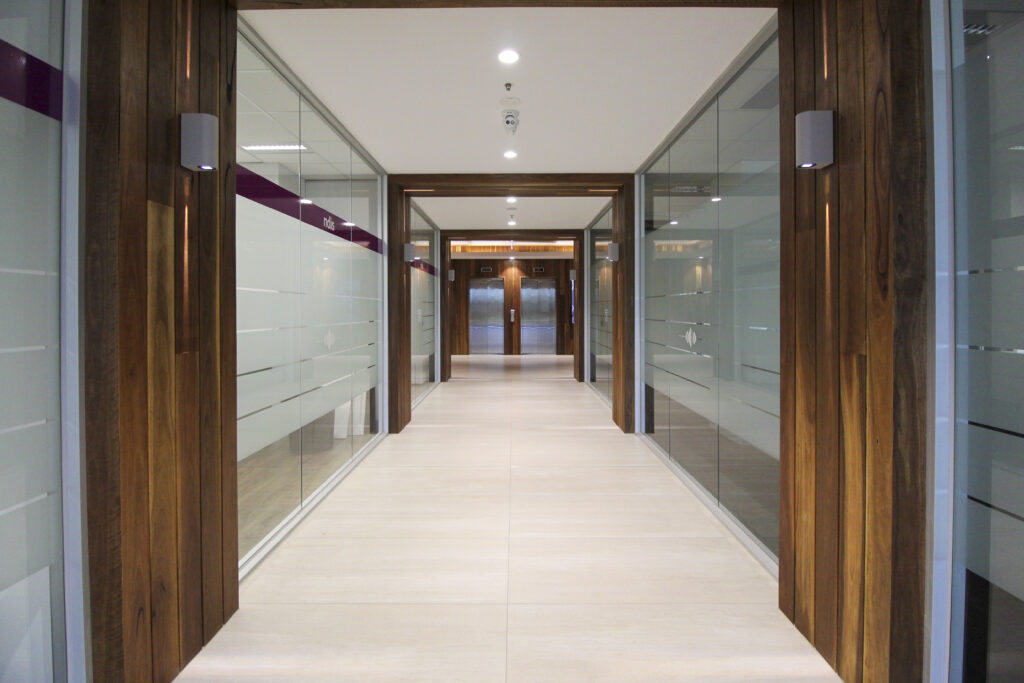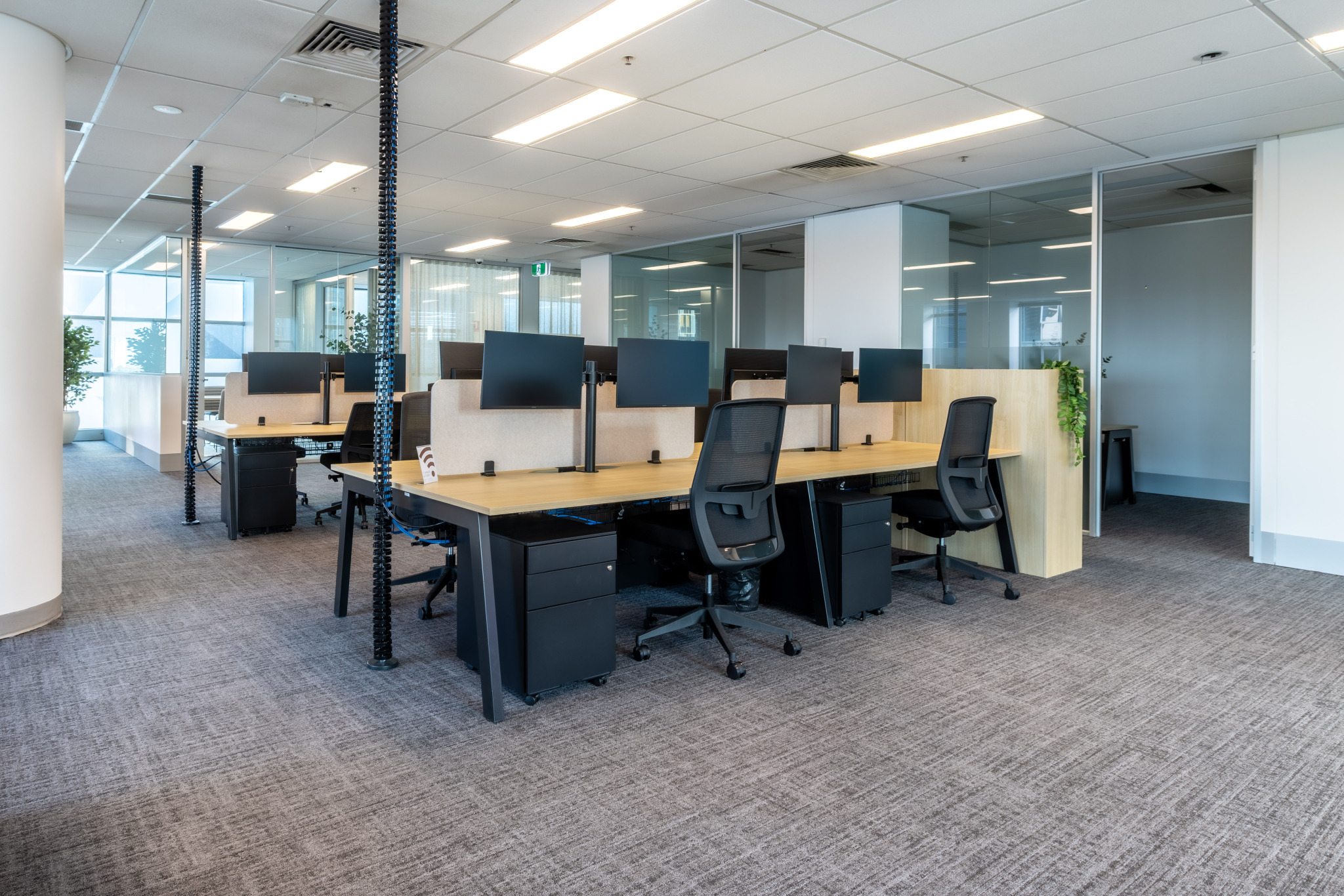
An office fitout in Melbourne involves planning, designing, and building a workspace that supports how your team actually works. From layout and compliance through to finishes and technology, the right approach can shape productivity, culture, and long-term growth.
Key Takeaways
- Office fitouts in Melbourne combine design, construction, and workplace strategy into one process
- A clear brief and budget early on prevents costly changes later
- Design should reflect both brand identity and how your team works day-to-day
- Choosing an experienced partner helps navigate permits, timelines, and compliance
- Future-proofing your office can reduce the need for major upgrades later
What Are Office Fitouts and Why Do They Matter?
Office fitouts are more than just furniture and paint. They involve transforming an empty or outdated space into a functional workplace tailored to your business needs. In Melbourne’s competitive commercial landscape, this matters more than many realise.
A well-executed fitout can influence everything from employee satisfaction to client perception. It shapes how people move, collaborate, and focus throughout the day. I think this is often underestimated. Many businesses focus on aesthetics first, when in reality, function tends to drive long-term success.
If you explore real-world examples like completed office fitout projects, you start to see how layout decisions and material choices directly impact usability.
How Does the Office Fitout Process Work in Melbourne?
The process can feel complex at first glance, but it generally follows a structured path. Understanding this early helps avoid delays and misaligned expectations.
Typical stages include:
- Initial consultation and site assessment
- Workplace strategy and concept design
- Budget planning and approvals
- Detailed design and documentation
- Construction and project delivery
Each stage builds on the last. Skipping steps or rushing decisions can lead to rework, which is where costs quietly creep up.
For a clearer breakdown of how everything flows together, reviewing a defined fitout process can help set realistic expectations before you begin.
What Should You Consider Before Starting an Office Fitout?
Before jumping into design ideas, it’s worth pausing and asking a few practical questions. These shape the entire project.
First, how does your team actually work? Hybrid models, quiet zones, and collaborative spaces all require different layouts. Then there’s your lease. If you’re nearing expiry, your fitout strategy might need to align with relocation or renewal plans.
Budget is another factor that deserves honesty. Not just the build cost, but also downtime, temporary relocation, and future scalability.
Interestingly, many businesses only realise gaps in their planning after reading through common pitfalls. Looking at guides like mistakes to avoid during an office fitout can reveal issues you might not have considered at all.
How Much Do Office Fitouts Cost in Melbourne?
Costs vary widely depending on size, quality, and complexity. There isn’t really a one-size figure, and anyone who suggests otherwise is probably oversimplifying things.
That said, several factors consistently influence pricing:
- Size of the space and existing condition
- Level of custom design and finishes
- Technology and infrastructure requirements
- Compliance upgrades and permits
- Timeline and project urgency
Some businesses prefer to get a quick estimate early on just to set expectations. Tools like an office fitout cost calculator can provide a rough starting point before diving into detailed quotes.
Still, cost should be viewed alongside value. A cheaper fitout that doesn’t support your team often ends up costing more in the long run.
What Design Trends Are Shaping Melbourne Offices?
Melbourne offices tend to reflect a mix of practicality and personality. Trends evolve, but a few consistent themes have emerged in recent years.
Flexible workspaces are becoming the norm. Instead of rigid desk layouts, businesses are incorporating zones for different activities. Quiet focus areas sit alongside collaborative hubs, which feels more natural for modern teams.
Sustainability is another major influence. Materials, lighting, and energy use are all being considered more carefully. It’s not always about big gestures either. Sometimes small decisions, repeated across a project, create meaningful impact.
There’s also a shift towards human-centred design. Natural light, greenery, and comfortable breakout areas are no longer optional extras. They’re expected.
If you look into broader insights on commercial office environments, you’ll notice how these trends are tied closely to employee wellbeing and retention.
How Do You Choose the Right Office Fitout Company?
Choosing the right partner can make or break the experience. And honestly, it’s not just about capability. It’s about alignment.
You want a team that understands your business, not just your floorplan. Communication plays a huge role here. If things feel unclear early on, that usually doesn’t improve later.
Here are a few things worth checking:
- Experience with similar industries or project sizes
- Transparency in pricing and timelines
- Ability to handle both design and construction
- Clear process and project management structure
- Willingness to challenge ideas when needed
It’s tempting to go with the lowest quote, but that can be risky. A slightly higher upfront investment often delivers a smoother process and better long-term results.
How Can Office Fitouts Improve Productivity and Culture?
This is where things get interesting. A well-designed office doesn’t just look good, it changes behaviour.
For example, open layouts can encourage collaboration, but without quiet zones, they can also become distracting. Balance is key. The best fitouts consider different work styles and provide options.
There’s also the cultural aspect. Your office reflects your brand and values. Clients notice it. Employees feel it. Even subtle design choices, like colour schemes or breakout areas, can influence how people interact.
Some businesses even find that after a fitout, retention improves. It’s not magic, of course. But when people feel comfortable and supported in their environment, they tend to stay longer.
What Are Common Mistakes to Avoid During an Office Fitout?
Even well-planned projects can run into issues. But many mistakes are surprisingly common and, with a bit of awareness, avoidable.
- Underestimating timelines and rushing decisions
- Focusing too much on aesthetics over functionality
- Ignoring future growth or team changes
- Poor communication between stakeholders
- Not factoring in compliance or building requirements
These mistakes often don’t show up immediately. They tend to surface months after completion, which makes them harder to fix.
That’s why planning, consultation, and realistic expectations are so important from the beginning.
Why Is Workplace Strategy Important in Fitouts?
Workplace strategy is sometimes overlooked, but it’s arguably one of the most valuable parts of the process.
It looks at how your team works now and how they might work in the future. Not just desk numbers, but behaviours, communication patterns, and technology use.
Without this step, design decisions can feel a bit arbitrary. You might end up with a space that looks impressive but doesn’t actually support your operations.
When done properly, strategy informs everything from layout to furniture selection. It creates a foundation that the rest of the project builds on.
Conclusion: Planning Your Office Fitout in Melbourne
Office fitouts in Melbourne are as much about strategy as they are about construction. The decisions you make early on tend to shape everything that follows, from cost and timeline through to how your team experiences the space day-to-day.
It’s easy to get caught up in finishes and design trends. But the most successful fitouts are the ones that quietly support productivity, culture, and growth without drawing too much attention to themselves. If you’re considering an office transformation, working with an experienced team can simplify the process and reduce risk. You can learn more about the team and their approach on the Office Vision homepage or get tailored advice by reaching out through the contact page.